


Frequently Asked Questions About the Hyundai Santa Cruz
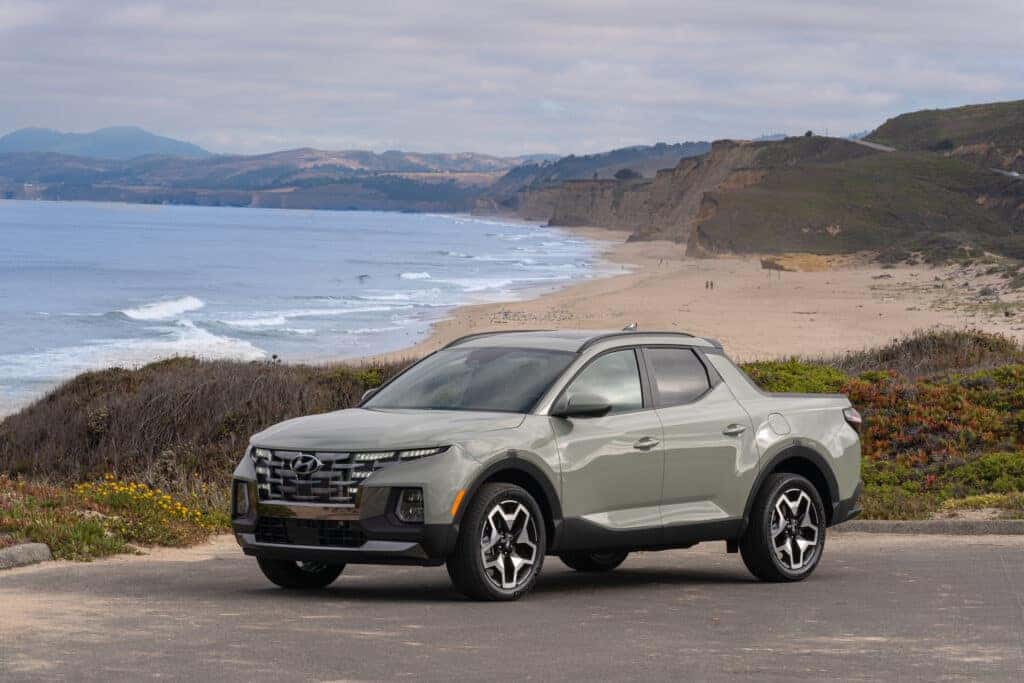
The city of Santa Cruz is a beautiful yet peculiar place on the California coast. It is home to the Mystery Spot, a place in the Redwood Forest where natural topography creates optical illusions. The UC Santa Cruz campus spread out on a Redwood-covered hill overlooking the Pacific Ocean, appears more like a summer camp that sprouted a few lecture halls and dorms. Santa Cruz is proudly weird. So, perhaps there is no better name for a vehicle as unique as the Hyundai Santa Cruz.
What Makes the Santa Cruz So Unique?
The Santa Cruz is overtly based on the Tucson, Hyunda’s best-selling model. Which, as part of the industry’s most popular segment, hits a sweet spot of providing five people comfortable car-like accommodations, along with significant cargo capability, while still being fuel-efficient and easy to maneuver.
Some cargo, however, doesn’t easily fit under a roof. Pieces of furniture, fitness equipment, or any other number of things can be too tall or awkwardly shaped to fit inside a hatch. The Santa Cruz is the first vehicle to combine all the right-sized goodness of a compact crossover with an open-air cargo bed. That makes it a truck for how most households use a truck. If you plan to fly off sand dunes or race through barely formed trails, there are other smaller trucks for that. But if you want a truck that is comfortable and efficient for everyday use and can carry big things, this truck is for you.
How Is Santa Cruz Powered?
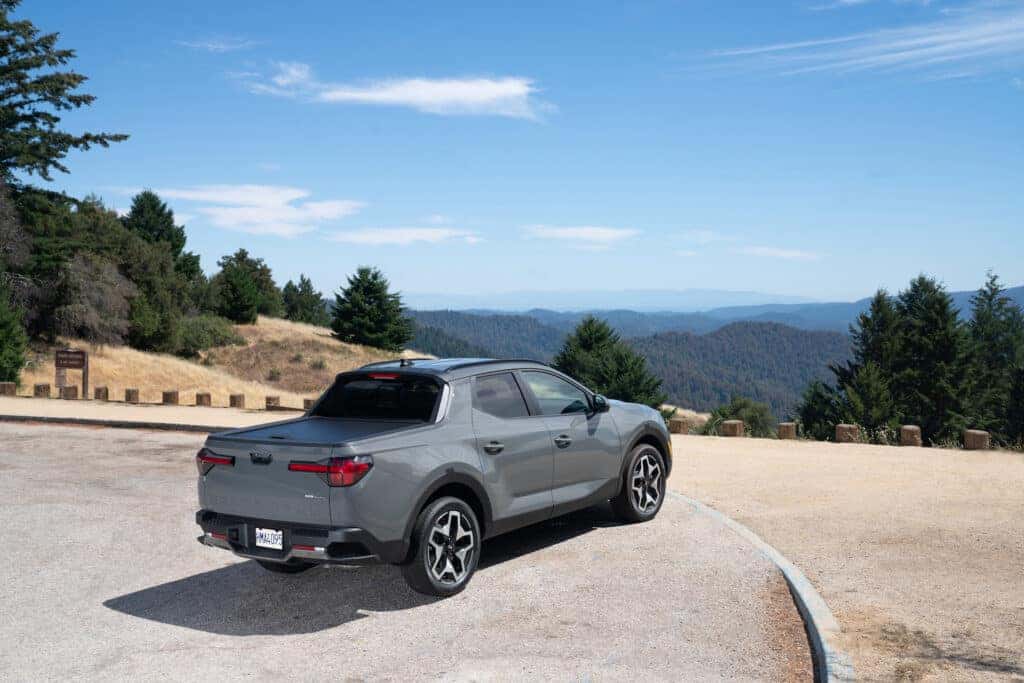
The Santa Cruz is available with a choice of two efficient 4-cylinder engines. The base engine is a 2.5-liter inline-4 producing a peak of 191 horsepower @ 6100 rpm and 181 lb-ft. Of peak torque at 4,000 rpm. It is mated to an 8-speed transmission and is available in both front-wheel drive (FWD) and HITAC all-wheel drive (AWD). FWD models have an EPA estimated MPG rating of 22/26/23 (city/highway/combined) and just subtract one from each figure for AWD.
SEL Premium, Limited, and the new Night grades are powered by a 2.5-liter turbocharged engine which bumps power up to 281 hp @ 5800 with a high and flat peak torque of 311 @ 1700-4000. This engine is connected to a lightning-fast shifting 8-speed Dual Clutch Transmission (DCT) with paddle shifters and is offered solely with the HITRAC AWD system. EPA estimates for this drivetrain drop a bit in the city but rise on the highway at 19/27/22.
How Good Is the Santa Cruz as a Truck?
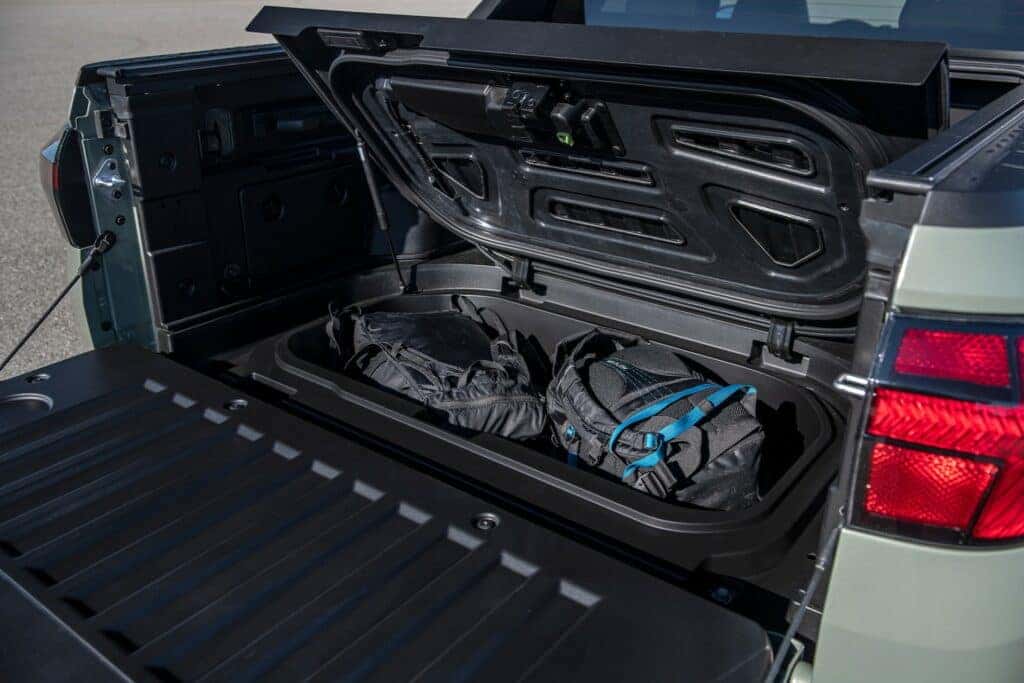
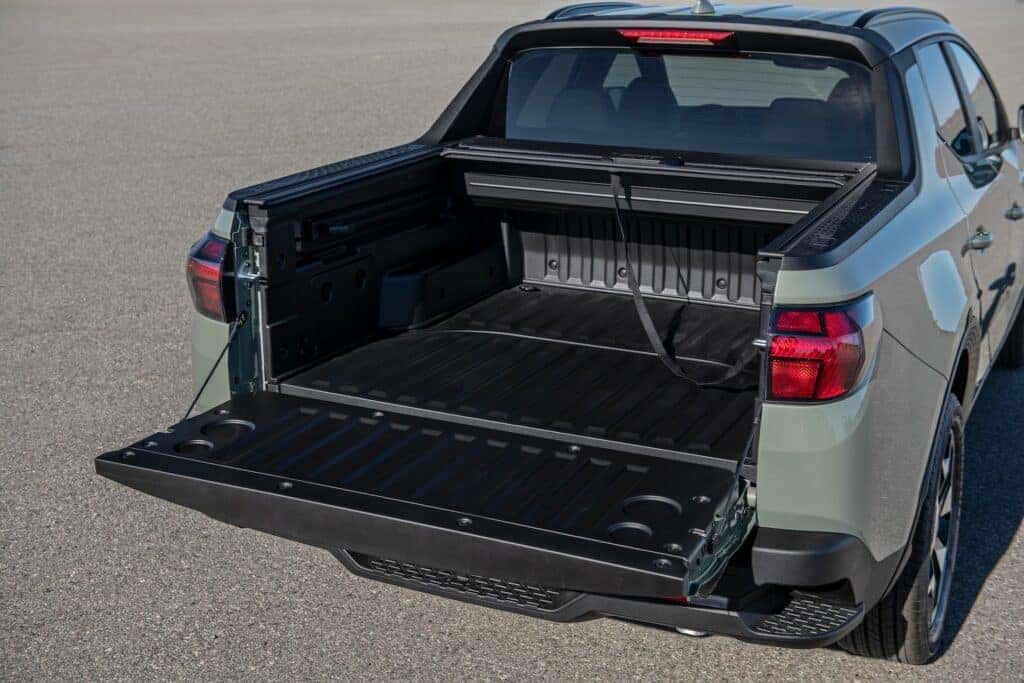
The cargo bed is 19.2 inches deep. 51 inches long at the floor and about 53.9 inches wide with minimal wheel well intrusion. Depending on the model, the maximum payload ranges from 1,568 to 1,749 pounds. The bed is finished with a dent and scratch-resistant sheet molded composite inner liner. For long-term storage items you don’t want bouncing around in the bed, there is a covered trunk just inside the tailgate which is waterproof with a drain giving you the option of filling it with ice to use as a cooler.
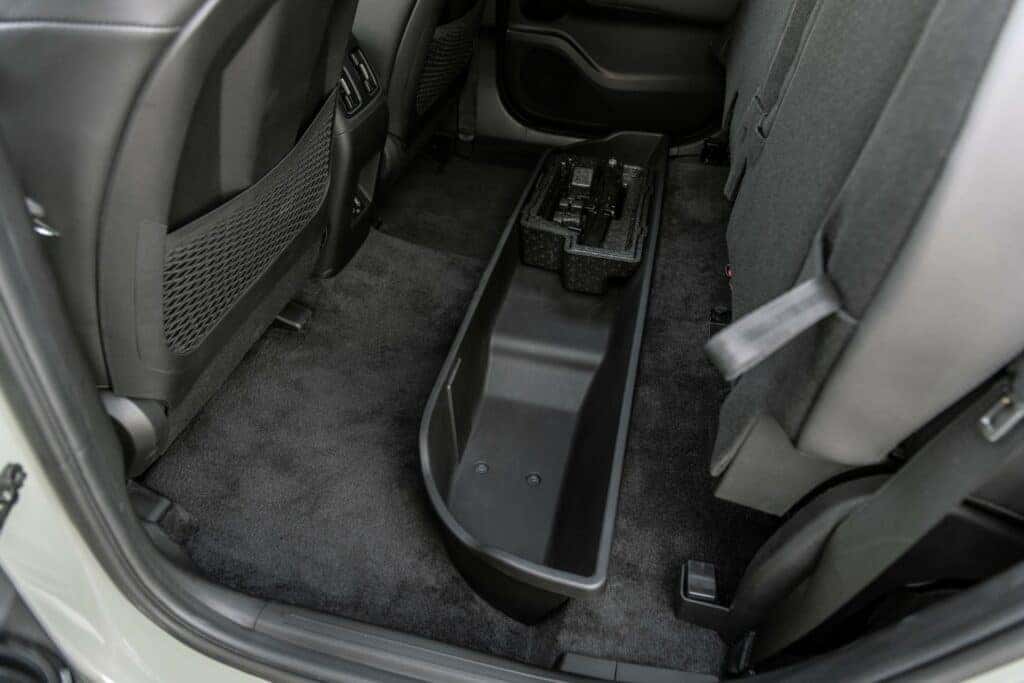
For larger secured storage, the standard tonneau cover encloses the entire cargo bed. To secure items in place, there is a utility track rail and cleat system, as well as heavy-duty cargo rings. To help you with loading and securing cargo at night, you have both LED bed lights and a roof-mounted LED cargo light. The locking tailgate secures items under both the tonneau cover and underfloor storage. The tailgate can be unlocked by a remote release. Roof side rails enable additional storage capability.
When properly equipped, the turbocharged models can tow up to 5,000 pounds, which incidentally is the same tow rating as the larger, more expensive, and V-6-powered Honda Ridgeline. Non-turbocharged models can tow up to 3,500 pounds.
How Good Is the Santa Cruz as a Car?
The Santa Cruz rides on the same 4-wheel independent front strut and rear multi-link suspension systems as the Tucson with the addition of a standard self-leveling rear suspension. Unibody construction keeps the body tight and rigid over bumps, and highway stability is further enhanced by a 118” wheelbase, which is 10 inches longer than the Tucson.
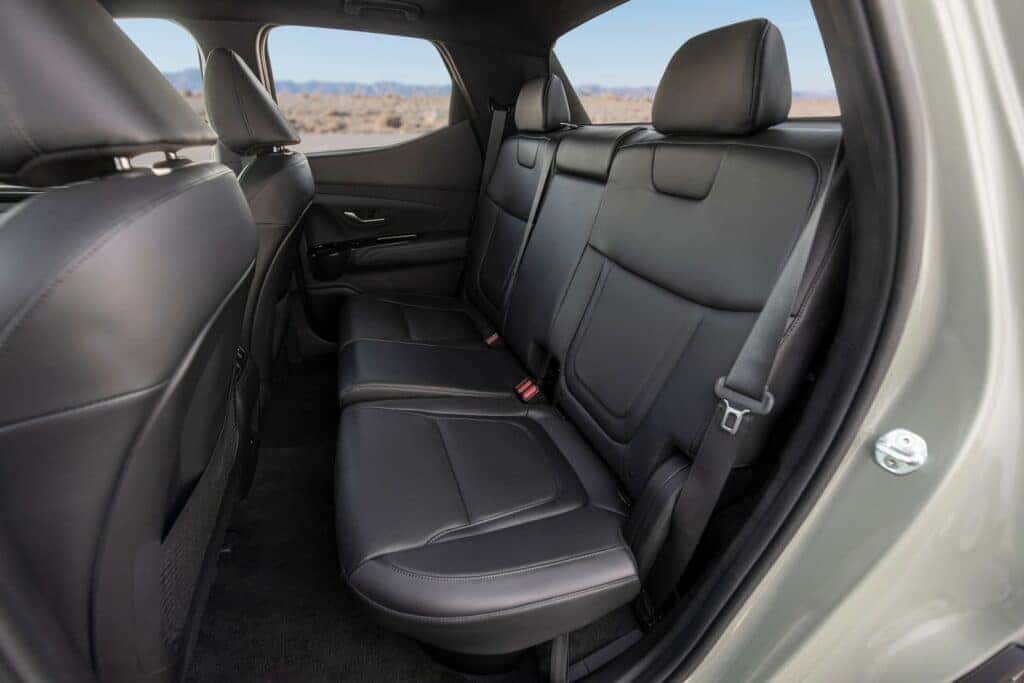
All Santa Cruz models feature a 4-door cab with room for five adults. Inside, you’ll find the sweeping, curved, modern-as-tomorrow Tucson instrument panel. The SE and SEL grades feature analog gauges, while all other grades have a fully-digital gauge cluster. The center touch screen is either 8 or 10.25 inches depending on the grade. Wireless Apple CarPlay® and Android Auto are standard on lower grades, and a Bose® Premium Audio System is standard on the Limited grade.
The Santa Cruz comes standard with the SmartSense array of safety and driver assist technologies including:
- Forward Collision-Avoidance Assist with Pedestrian Detection (FCA-Ped)
- Blind-Spot Collision-Avoidance Assist (BCA)
- Rear Cross-Traffic Collision-Avoidance Assist (RCCA)
- Lane Keeping Assist (LKA)
- Lane Following Assist (LFA)
- High Beam Assist (HBA)
- Safe Exit Warning (SEW)
- Rear Occupant Alert (ROA)
- Upper trim levels include such niceties as:
- Blind-Spot View Monitor (BVM)
- Smart Cruise Control (SCC) with Stop & Go
- Highway Driving Assist (HDA)
- Surround View Monitor (SVM)
Best of Both Worlds
As a compact-sized crossover with an open bed, the Santa Cruz may be unique in the marketplace, but it has been carefully designed to provide all the truck almost any residential truck buyer is likely to need while offering them the comfort and efficiency of the Tucson compact crossover. If that makes it weird, like its namesake, it is good weird.

0 comment(s) so far on Frequently Asked Questions About the Hyundai Santa Cruz