


How the Hyundai Santa Fe Beats the Toyota RAV
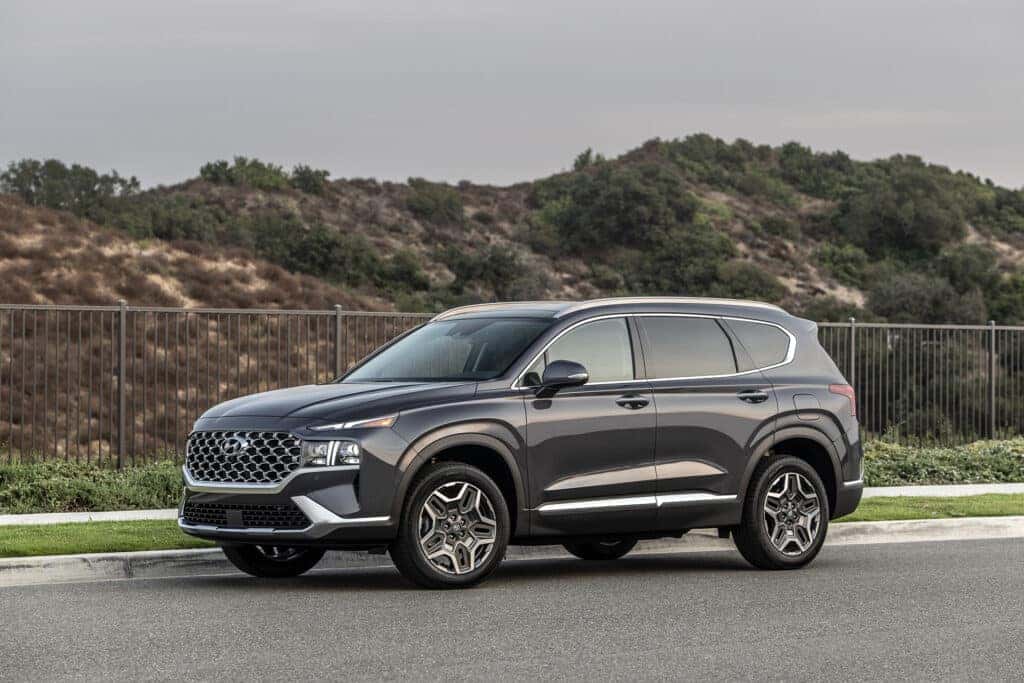
Aside from the always best-selling Ford F150 pickup, the Toyota RAV4 is the best-selling vehicle in the U.S., and that makes it something of a standard of reference for buyers of 5-passenger crossovers. While the Santa Fe can be considered to be a size larger than the RAV4, there is enough price overlap that enthusiast site MotorBisket decided to compare the two, and Hyundai of Mankato wants to share with you this account of their results.
Size Matters

Starting with the most obvious difference, the Sante Fe is indeed larger than the RAV4. It is almost two inches wider, close to 8 inches longer, and has a 3-inch longer wheelbase. That translates directly to greater interior room, with the Sante Fe offering about three inches more front legroom and just a hair short of four inches more legroom for rear passengers. The two more inches of width means about two inches more rear shoulder room and about an inch and a half more in the front.
With all seats up, the RAV4’s 37.6 cubic feet of cargo space has a very slight edge over the Sante Fe’s 36.4. That turns around when you lower the rear seatbacks, where the 72.1 cubic feet of maximum cargo space for the Santa Fe beats out the 69.8 cubic feet of the RAV4. In this configuration, both models have the convenience of seats that fold flat to create a level cargo floor.
Drivetrain Choices
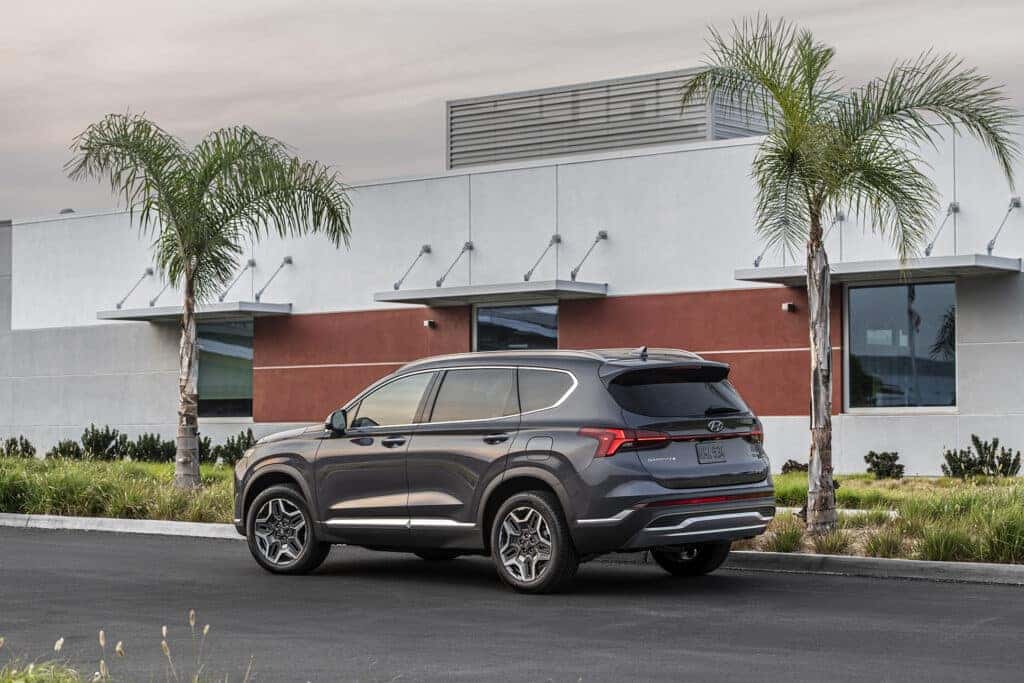
The drivetrains are remarkably similar with both models starting with a naturally aspirated 2.5-liter inline 4 mated to an 8-speed shiftable automatic. At 203, the RAV4 has about 12 more horsepower and also has 3 lb-ft more torque, though in both cases, the Sante Fe reaches its peak at lower rpm for better real-world, day-to-day performance. In base form, the RAV4’s combined mileage beats the Sante Fe’s, but with a larger fuel tank by four gallons, the Sante Fe has a longer range.
However, as you climb the model hierarchy, the RAV4 stays with the same drivetrain unless you switch to hybrid models, while the Sante Fe offers a turbocharged version of the 2.5-liter engine that produces 281 horsepower and 311 lb-ft of torque. In terms of handling, MotorBisket noted that the Sante Fe had more responsive steering and felt quite well-planted in curves. The RAV4 was found to have less body roll, but its steering had a vague feel.
Your Comfort Zone
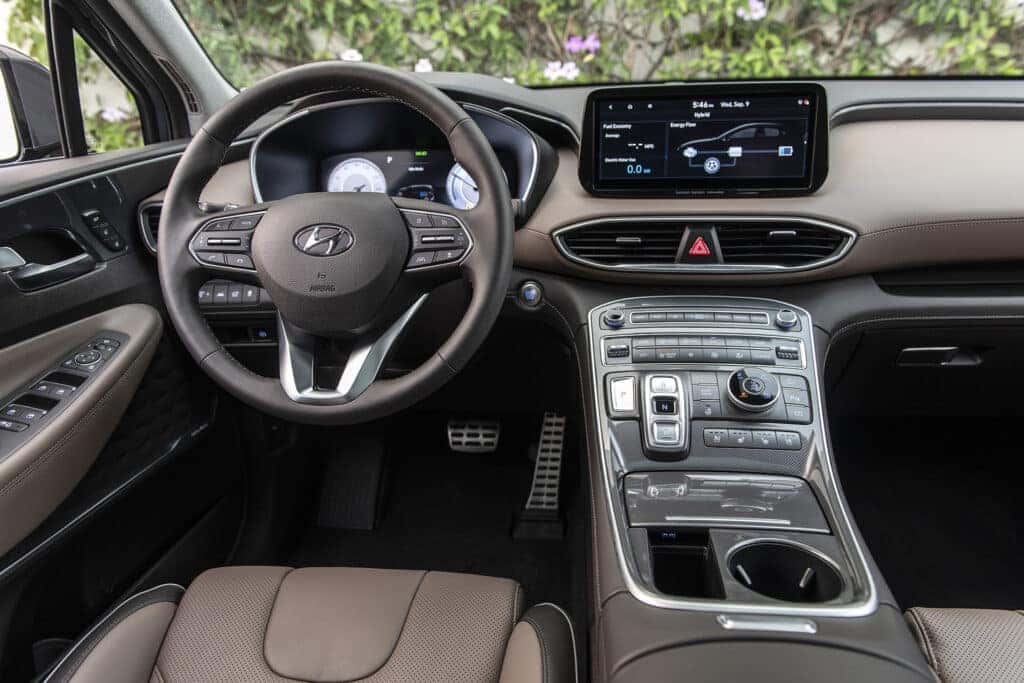
The reviewers also noted that the longer wheelbase of the Santa Fe was better at smoothing the highway ride and that the Sante Fe had less wind, road, and engine noise. In addition to the greater amount of room, they found the Sante Fe to have a more premium interior, which they describe as near-luxury with high-quality materials. They also cited some premium features not offered on the RAV4, such as its automatic parking system, ambient interior lighting, and a head-up display.
Arguably, Tucson is the more direct competitor to the RAV4 and even competes directly against its hybrid and plug-in hybrid models. As mentioned, however, the Sante Fe and RAV4 have enough price overlap that anyone considering a mid-to-high-level RAV4 should definitely cross-shop the larger, more comfortable Sante Fe. If you are interested in a compact or larger 5-passenger crossover, you should visit Hyundai of Mankato, which has a robust inventory of both Sante Fe and Tucson models.

0 comment(s) so far on How the Hyundai Santa Fe Beats the Toyota RAV